Evening Zoom Book Club
Calendar of Events
Always once a month.
hipcil- Marily Gonzalez-Escobar, CEO/President is inviting you to a scheduled Zoom meeting.
Topic:
Heightened Independence & Progress Evening Book Club.
Time:
Oct 30, 2026 07:00 PM Eastern Time (US and Canada)
Every month on the Last Fri, 36 occurrence(s)
Please download and import the following iCalendar (.ics) files to your calendar system.
Meeting ID: 824 8020 0638
Passcode: 277571
—
One tap mobile
+16469313860,,82480200638#,,,,*277571# US
+19294362866,,82480200638#,,,,*277571# US (New York)
—
Join by SIP
The Evening Book Club is a friendly, laid-back space for readers to come together to enjoy a good story and share thoughts, laughter, and conversation.
We meet on the last Friday of each month via Zoom, making it easy to join from the comfort of home.
At the end of each meeting, members help choose the book for the following month—so everyone has a voice in what we read next.
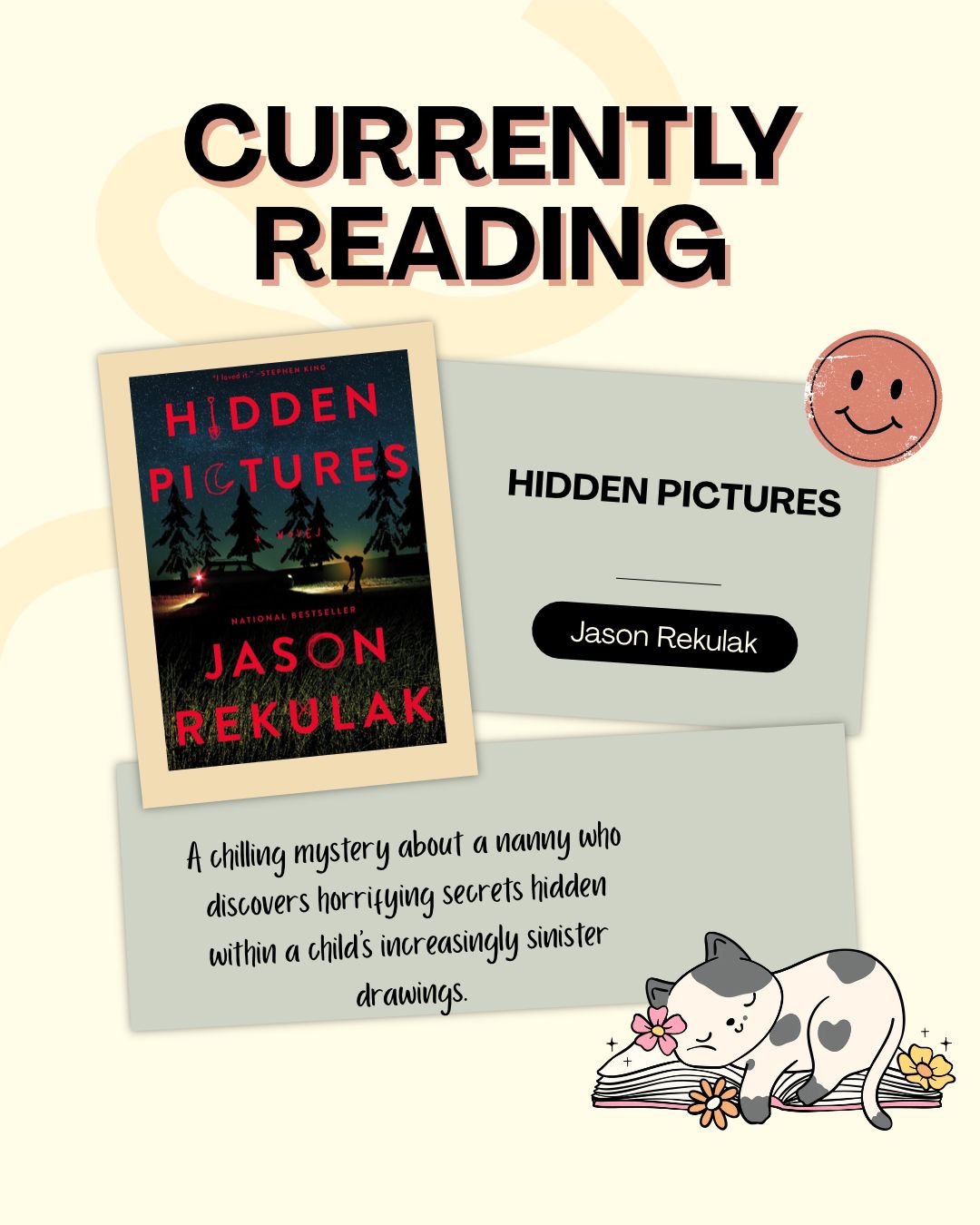
October Selection: Hidden Pictures by Jason Rekulak
- NLS Book Number: DB 108427
Author: Jason Rekulak
- Availability Note: Available on audio via NLS BARD and Hoopla (approx. 8 hours listening time), and as an e-book on Kindle Unlimited!
- Blurb: Fresh out of rehab, Mallory Quinn takes a job as a nanny in the affluent suburb of Spring Brook, New Jersey, caring for five-year-old Teddy. Teddy is a sweet boy who loves to draw, but recently his sketches have taken a disturbing turn—shifting from cute trees and animals to a dark, detailed illustration of a man dragging a woman’s body through the forest. As Teddy’s drawings become increasingly complex, realistic, and supernatural, Mallory begins to suspect that an unsolved murder from the past is trying to reveal itself through the child, forcing her to confront her own fragile recovery and uncover the dark secrets hidden within the quiet neighborhood.
-
Discussion Highlights:
Discussion questions are included below. Participants are welcome to review them in advance, write down responses, or simply use them to guide conversation during the meeting.
All are welcome. Bring your curiosity, your favorite beverage, and your love of books—we look forward to reading with you!
For more information, please call Blagica at 201-996-9100 ext. 115.
Discussion questions:
🎨 Art, Medium & Storytelling
-
The Drawings as a Narrative Tool: Hidden Pictures relies heavily on visual art and drawings to convey supernatural elements and plot clues. How well did this transition to an audiobook/audio format for you? Did the narration or descriptions successfully build suspense?
-
Adult vs. Child Perspective: How does the author build horror through the innocence of a five-year-old child like Teddy? Did you find Teddy’s drawings creepy, tragic, or a mix of both?
-
Visual Clues vs. Written Narrative: For those who read the text version vs. listened to audio, how did seeing (or imagining) the illustrations affect your pacing and reading experience?
🔍 Character Trust & Reliability
-
The Unreliable Narrator: Mallory is open about her past struggles with addiction and recovery. How did her background influence whether other characters—or you as the reader—believed her theories about the drawings?
-
Suburban Secrets & Perfection: On the surface, the Maxwell family and their neighborhood appear picture-perfect. How does the novel explore the theme of dark secrets hidden beneath suburban perfection?
-
Supporting Cast Dynamic: What did you make of characters like Adrian (the neighbor/eccentric artist) or the Maxwell parents? Did your suspicions about who to trust shift throughout the story?
⚡ Mystery, Pacing & Twists
-
The Shift in Tone: Hidden Pictures blends paranormal ghost story elements with psychological thriller tropes. Did you anticipate the major plot twists, or did they catch you off guard?
-
Themes of Redemption & Protection: At its core, Mallory’s journey is about her own recovery and her strong protective instincts toward Teddy. How did her fight for Teddy parallel her own personal recovery journey?
-
Supernatural vs. Real-World Horror: Which aspect of the book felt more unsettling to you—the ghost/paranormal element, or the human motives and real-world actions revealed near the climax?
-
The Resolution: How satisfying did you find the ending? Were all the loose ends tied up neatly, or were there aspects of the climax you wished went differently?
Back to the Homepage